
Booking a massage should feel straightforward, but for many people choosing a gay massage centre, privacy can be just as important as the massage itself. A customer may want to relax without being judged, explain personal preferences without feeling awkward, and trust that details shared during booking will remain confidential.
Privacy is not limited to having a closed treatment-room door. It begins with the first WhatsApp message or online enquiry and continues through appointment confirmation, arrival, consultation, treatment and follow-up communication. It also covers how the centre handles names, phone numbers, health information, massage preferences and payment details.
A professional gay massage centre should create an environment where every customer feels respected and in control. Clear service descriptions, discreet communication, proper draping, informed consent and responsible handling of personal information all contribute to a safer and more comfortable massage experience.
Reasons People Choose a Gay Massage Centre
An LGBTQ+-Friendly Environment
Some gay and bisexual men feel more comfortable visiting a massage centre that openly welcomes LGBTQ+ customers. They may have experienced awkward questions, assumptions or judgement in other wellness settings. A gay-friendly massage centre can remove some of that uncertainty by offering a space where customers do not feel pressured to explain or defend who they are.
Being LGBTQ+-friendly, however, involves more than using inclusive wording in advertisements. It should be reflected in the way staff speak, respond to enquiries and respect personal boundaries. Customers should be treated professionally regardless of their sexual orientation, gender expression, body type, age or relationship status.
A genuinely inclusive environment does not make assumptions about what a customer wants. Instead, the therapist asks practical questions about pressure, comfort, areas of tension and the customer’s goals for the session. This creates a more personalised experience while keeping the conversation respectful.
Professional and Experienced Therapists
Customers often choose a specialised gay massage centre because they hope to receive treatment from a therapist who understands male anatomy, common areas of muscular tension and the importance of respectful communication.
A professional male massage therapist should be able to explain the available massage styles and help the customer choose an appropriate treatment. Someone seeking general relaxation may prefer a gentler full-body massage, while an office worker with persistent shoulder tightness may require more focused pressure. Gym-goers, runners and physically active customers may be more interested in sports massage or deep tissue techniques.
Experience is not measured only by the therapist’s ability to apply strong pressure. A skilled therapist pays attention to how the body responds, checks whether the pressure is comfortable and adjusts the technique when needed. He should also recognise when massage may not be appropriate, such as when a customer has a recent injury, unexplained swelling, fever, skin infection or another condition that may require medical assessment.
Professionalism also means maintaining clear boundaries. The therapist should explain the session before it begins, use appropriate draping and obtain consent before working near sensitive or unfamiliar areas. A customer should never feel pressured to accept a technique that makes him uncomfortable.
A Comfortable and Private Setting
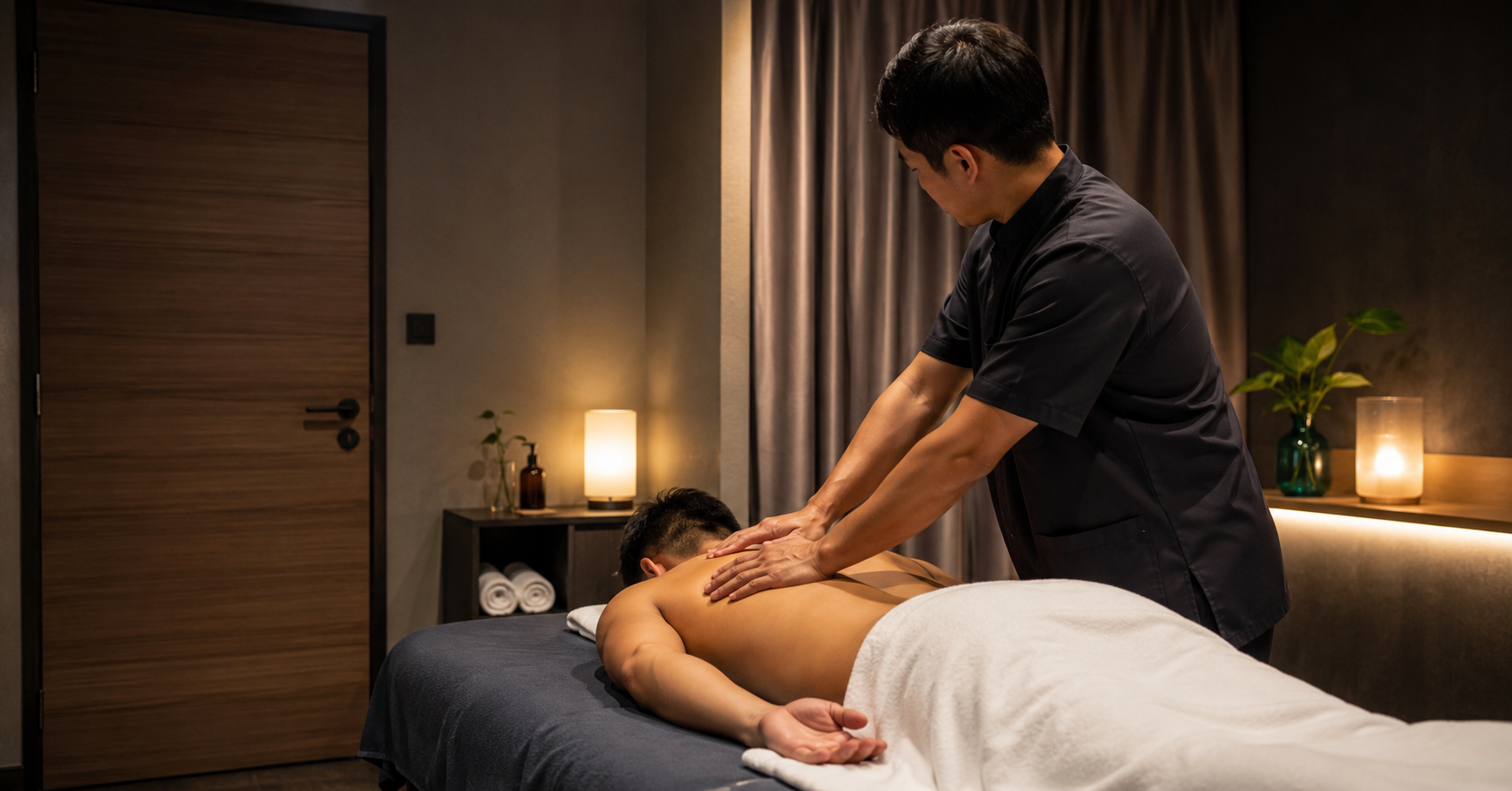
It is difficult to relax when conversations can be overheard, people are walking in and out, or the treatment area feels exposed. A private massage room gives the customer space to change, speak with the therapist and receive treatment without unnecessary interruptions.
The room does not need to be luxurious, but it should be clean, secure and properly prepared. Fresh towels, clean linen, suitable lighting, good ventilation and a door or effective privacy barrier are basic signs that the centre takes customer comfort seriously.
Draping is another important part of massage privacy. Only the area being worked on should be uncovered, while the rest of the body remains appropriately covered. Before the treatment begins, the therapist should explain the draping arrangement and give the customer enough time to change in private.
A comfortable setting is not only physical. Customers should feel able to speak up during the session. They can ask for lighter pressure, request additional attention on a tense area, exclude a body part from treatment or stop the massage entirely. A professional therapist will respond calmly without making the customer feel difficult or embarrassed.
Understanding Individual Preferences
No two customers experience massage in exactly the same way. One person may enjoy firm pressure across the back and shoulders, while another may find the same pressure uncomfortable. Some prefer a quiet session, whereas others feel more at ease with occasional conversation.
A privacy-conscious gay massage centre should discuss these preferences discreetly. The consultation can cover the purpose of the visit, preferred pressure, areas of muscular tension, previous injuries and any parts of the body the customer does not want treated. Only relevant information should be requested.
Consent should not be treated as a one-time question. It is an ongoing part of the session. Agreeing to a full-body massage does not mean agreeing to every possible technique or area of contact. The therapist should continue observing the customer’s comfort and ask before changing the agreed treatment approach.
This level of communication helps prevent misunderstandings. It also allows the therapist to provide a more suitable experience, whether the customer is booking a relaxation massage, deep tissue massage, sports massage or another form of male-to-male bodywork.
Protection of Personal Information
Customers may share more information with a massage centre than they realise. A simple booking can include a name, telephone number, preferred appointment time and service choice. A consultation may involve information about physical discomfort, injuries, medical conditions or personal preferences.
For a gay massage centre, responsible data handling may include using booking information only to arrange the appointment, limiting staff access to customer records and avoiding unnecessary collection of identity documents or sensitive information. Health-related details should be treated with particular care.
Follow-up marketing should also be handled respectfully. A centre should not send frequent or revealing promotional messages without permission, especially when a shared phone or notification screen could expose the nature of a customer’s visit. Customers should have a clear way to decline further marketing communication.
Conclusion
Privacy plays a central role in creating a safe and relaxing gay massage experience. Customers need more than a quiet room; they need respectful communication, professional therapists, informed consent, appropriate draping and confidence that their personal information will be handled responsibly.
A suitable gay massage centre in KL should make its services and boundaries clear, collect only relevant information and provide an environment where customers can express their preferences without judgement. When privacy is taken seriously, it becomes easier to relax, communicate honestly and focus on the purpose of the session.
Before booking, take a few minutes to ask questions and observe how the centre responds. A professional provider will understand that discretion is part of good service. The right massage centre should leave you feeling comfortable, respected and in control from beginning to end.
 English
  Chinese